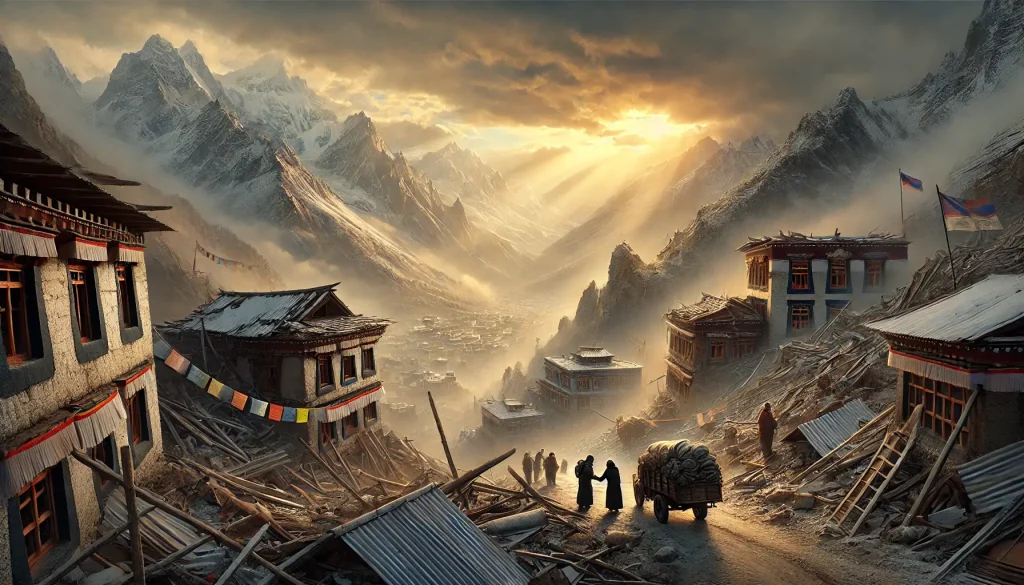
On January 7, 2025, at 9:05 a.m., a devastating earthquake struck the sacred city of Shigatse in Tibet. This 7.1 magnitude tremor shook the earth and the hearts of countless people worldwide who hold Tibet close, whether spiritually, culturally, or as their homeland. Reports revealed the staggering toll: at least 126 lives lost, 338 people injured, and over 47,000 displaced from their homes. These numbers, as heartbreaking as they are, only hint at the full extent of the suffering experienced in this deeply spiritual region.
For those unfamiliar with the significance of Shigatse, it is more than just a city. It is home to Tashilhunpo Monastery, the seat of the Panchen Lama, and a hub of cultural and spiritual heritage. It is a place where the land itself feels imbued with sacred energy, and where mountains, rivers, and monasteries tell stories of their history and culture. To see this city and its surrounding villages ravaged by such a powerful force of nature feels devastating.
The earthquake’s impact went beyond Tibet, with tremors felt in neighboring regions like Bangladesh, Nepal, Bhutan, and northern India. The physical destruction is immense. Entire villages have been affected, with homes, schools, and marketplaces reduced to rubble. Rescue workers have been digging tirelessly in freezing conditions, searching for survivors. Over 1,500 firefighters and volunteers have joined hands, risking their own lives to save others. Temporary shelters have sprung up to offer displaced families some semblance of safety, but for those who have lost loved ones, no structure can provide the solace they truly need.
The devastation extends to the spiritual heart of Tibet. Monasteries, such as Dzongbu Temple and Sengar Chode Monastery, have suffered extensive damage. These sacred spaces, which have stood as symbols of peace and resilience for centuries, are now fractured and crumbling. Monks and nuns, who dedicate their lives to prayer and service, are among those affected.
Yet, amidst the devastation, the resilience and strength of the Tibetan people shines through. Tibetans have always lived in harmony with their environment, enduring the hardships of life in the mountains with dignity and strength. As someone who is familiar with their culture and nature, I know about their spirit of endurance. Communities have come together to share resources, offer comfort, and rebuild what has been lost.
Faith, too, plays a critical role during this time. The Tibetan belief in impermanence, a cornerstone of Buddhist philosophy, reminds us that suffering is part of the human experience and that even the darkest moments will pass.
For those of us who are not in Tibet but feel deeply connected to its culture and people, this is a moment to act. The people of Tibet need our prayers; but more importantly, they need tangible support. Aid organizations are working on the ground, providing food, medical supplies, and shelter. Every contribution, no matter how small, can make a difference in rebuilding lives and preserving this unique and precious culture.
This tragedy is a reminder of the fragility of life. It calls on all of us to reflect on what truly matters: the bonds we share as humans, the importance of helping one another in times of need, and the strength that allows us to rise from even the most devastating losses.
As I write this, I think of the mountains that cradle Tibet, their silent peaks bearing witness to centuries of human struggle and triumph. I think of the prayer flags that will once again flutter in the wind, carrying messages of hope and renewal to the heavens. And I think of the people, the survivors, who will rebuild their homes, their monasteries, and their lives with the same strength that has defined them for generations.
To the people of Tibet: you are not alone. The world stands with you, grieving with you, and supporting you in this time of unimaginable loss. Your resilience inspires us, and your spirit gives us hope. Though the ground beneath you has shifted, your strength and faith remain unshaken. May you find peace and healing in the days to come.
And to those reading this: let us honor the resilience of the Tibetan people by doing what we can to help. Whether it’s a donation, spreading awareness, or holding them in your thoughts, every action matters. Together, we can help ensure that the beauty and spirit of Tibet endure for generations to come.
Let the mountains heal. Let the people rebuild. And let us stand in solidarity with Tibet, now and always.