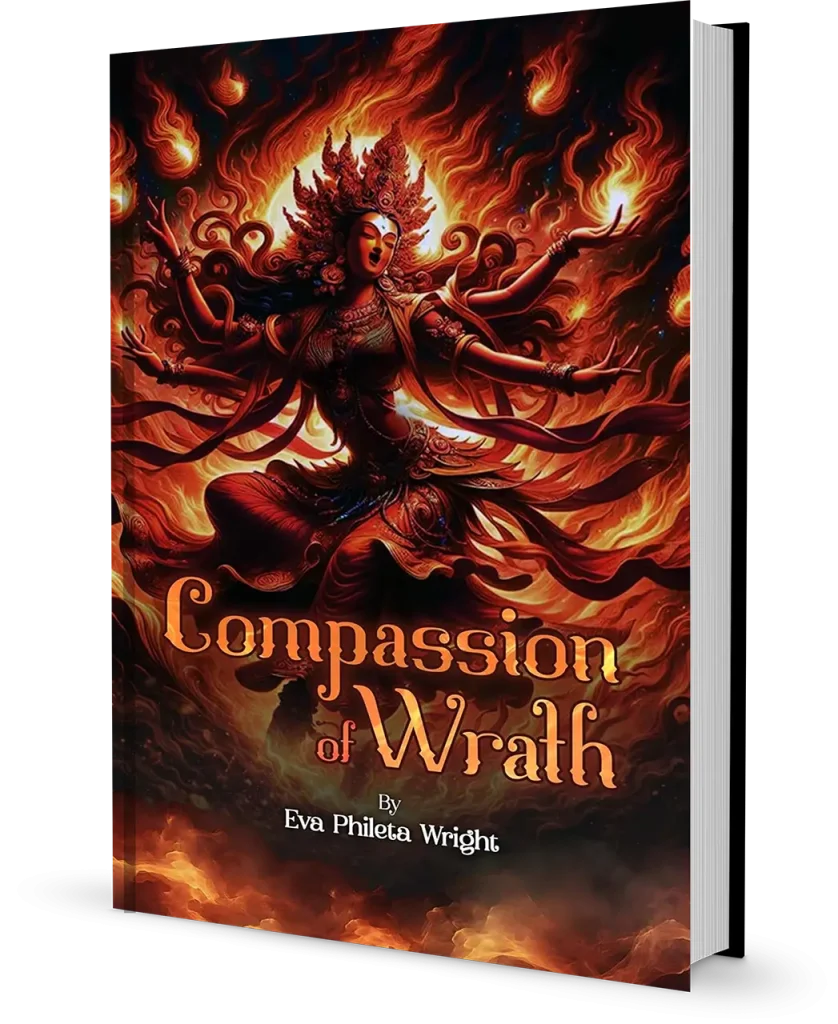
This book narrates the spiritual and historical journey of Pema Norbu, a fictional healer and Bön novice monk karmically connected to the 17th-century Tibetan Buddhist Nyima Drakpa. It explores his encounters with wrathful feminine deities, his challenges with monastic authorities, and his path toward embodying a unique form of spiritual transmission beyond traditional tertön roles.
Pema Norbu’s early spiritual experience:
In adolescence, Pema Norbu, born with healing siddhis, encountered a powerful dakini presence without formal empowerment, leading to tension with monastic authorities and marking the beginning of his unique spiritual path.
Monastic discipline and punishment as transformation:
After a ritual breach, Pema was punished with solitary chores, which he reframed as a service and offering, metabolizing humiliation into spiritual growth and developing a deeper connection to the dakini’s presence.
Living terma as embodied transmission:
Instead of revealing hidden texts, Pema embodies a “living terma,” a catalytic presence that refracts spiritual transmission through silence and presence, influencing and healing others without formal teaching or lineage claims.
Historical inquiry into Nyima Drakpa and sectarian context:
Pema investigates his predecessor Nyima Drakpa’s controversial reputation, finding that accusations of murder in sectarian conflicts were likely polemical, and that the fierce actions were rooted in compassionate preservation rather than destruction.
The General’s vow and its karmic legacy:
The story of the military attendant of the tenth Karmapa, bound by a protective vow manifesting as a ghost and a reincarnation, illustrates themes of loyalty, unresolved karmic duty, and the intersection of spiritual and worldly obligations.
Pema’s role in resolving karmic entanglements:
Using his healing siddhi, Pema performs a ritual dissolution of the attendant’s lingering karmic tether, releasing the spirit and transforming a historical burden into a compassionate teaching.
The elders’ cautious response:
Monastic elders recognize Pema’s unique spiritual work as karmic healings tied to a shamanic lineage, giving rise to many concerns over the implications for the monastery, even as it prepares to support his evolving path.
The interplay of wrathful compassion and monastic training:
Pema’s encounters with wrathful feminine energies challenge traditional monastic structures, requiring him to balance raw visionary power with discipline, supported by mentors and peers who help him navigate this complex spiritual inheritance.